Salem witch craft trial
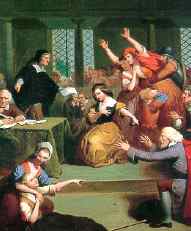 The salem witch craft troubles all began in New England in the winter of 1692,
a year of political uncertainty throughout the Massachusetts Bay
Colony.
The salem witch craft troubles all began in New England in the winter of 1692,
a year of political uncertainty throughout the Massachusetts Bay
Colony.
In the kitchen of the Salem parsonage, a West Indian slave named Tituba amused the minister's 9 year old daughter, Elizabeth Parris and her 11 year old cousin, Abigail, with witch craft, tricksand spells and tales of the occult. Sometimes Tituba told fortunes by studying patterns of egg whites in a glass, a pastime that to the 17th century Puritan was devilry, but one that captivated the adolescent neighbour girls who visited Tituba's kitchen.
As winter wore on, the girls began to behave bizarrely. When the village doctor called and could find nothing physically wrong with the girls, he concluded that the evil hand is on them.
Mr. Parris begged the afflicted girls to name the witches, and so Elizabeth blurted out the name of Tituba and other names such as Sarah Good, a despised pipe-smoking beggar, and Sarah Osborne, who had scandalized the village by living openly with a man before marriage. At a hearing in early March the Salem witch craft trial began. Tituba confessed that she was indeed a witch. She also claimed that she was one of many witches in the village and that a tall man from Boston had shown her a book listing all the witches in the colony.
With that, the salem witch craft trial began.
In seven months time, seven men and thirteen women were executed for practicing witch craft, many on the basis of the testimony of ghosts and specters. Those who would not confess were killed and Tituba was spared and sold by the Parrises.
When the frenzied accusations reached the apex of colonial society, public opinion turned. Within 18 months, Governor William Phips had pardoned all suspected witches who had not been executed, even the executed were exonerated, though the name Salem endures as a symbol of societal madness.
Home | Beginner Witchcraft | Course | AI Chat | Witchcraft History | Witchcraft Spells | Witchcraft Magick | Salem Witchcraft | Wicca | Sitemap | AI Assistant Guide | Privacy Policy | Terms of Use
Copyright © Witchcraft.com.au 2026 All Rights Reserved